UbiComp / ISWC 2026 Workshop

Ubiquitous Connectivity for Agentic and Physical AI

Con4AP brings together pervasive computing, communications, networking, robotics, and AI researchers to co-design connected embodied agents for real-world deployment.

UbiComp / ISWC 2026
UbiComp / ISWC 2026 October 12, 2026 · 08:30–12:30 Room 5I · Shanghai, China Open in-person workshop
6 pages Regular research papers
4 pages Position and vision papers
30-40 Expected attendees
Double-blind Peer review

About the Workshop

Connectivity as a first-order constraint for embodied intelligence

As artificial intelligence bridges digital reasoning and physical execution, agentic and physical AI increasingly depends on pervasive devices such as wearables, ambient sensors, smart-home actuators, autonomous robots, AR/VR headsets, and connected vehicles. In these settings, connectivity is no longer a background utility: latency, bandwidth, reliability, energy use, mobility, and intermittent links directly bound what agents can perceive, decide, and control.

Con4AP focuses on the symbiosis between agentic planning and network reliability. The workshop aims to surface deployment-time constraints, seed collaboration across AI, robotics, communications, networking, and UbiComp/ISWC communities, chart a shared research roadmap, and create direct opportunities for early-career researchers.

Call for Papers

Topics of interest

We invite regular research papers up to 6 pages plus references and position or vision papers up to 4 pages plus references. Submissions should follow the UbiComp/ISWC 2026 template and will be reviewed double-blind by at least three program committee members.

Connected Agents

  • Goal-oriented and semantic communication for embodied agents
  • Multi-agent reinforcement learning under realistic network constraints
  • Networked control and consensus for swarm robotics and connected vehicles
  • Telesurgery, AR/VR, smart-home, and on-body assistant workloads

Computing and Sensing

  • Distributed inference, split computing, and on-device foundation models
  • End-edge-cloud partitioning for continuous health monitoring
  • Wearable and pervasive sensing pipelines for agentic models
  • Datasets, benchmarks, and testbeds for connectivity and embodied AI

Networks, Trust, and Co-Design

  • Joint communication-computation-control co-design for 6G and body-area networks
  • Cross-layer wireless and wired protocols for latency-sensitive agents
  • Trustworthy, privacy-preserving, and resilient connected-agent architectures
  • Human-in-the-loop oversight for sensitive on-body and ambient data

Invited Speakers

Keynote speaker

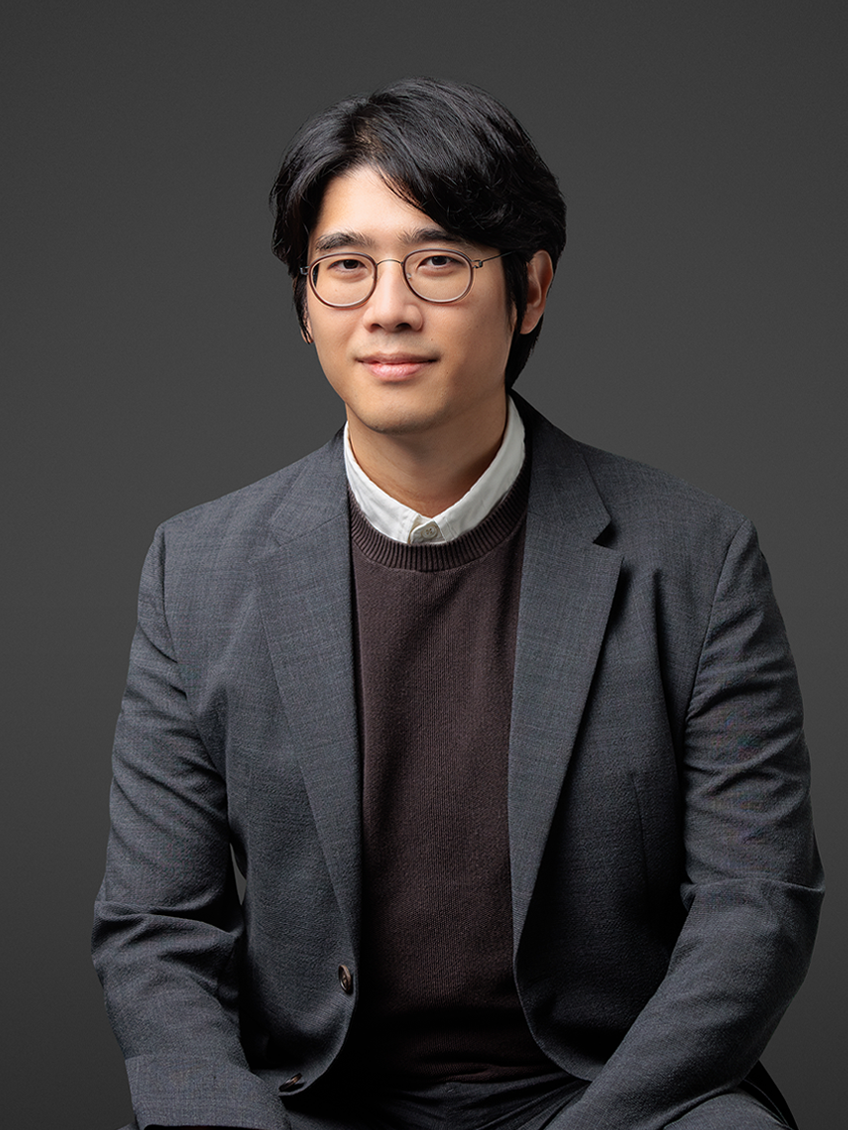
Prof. Kun Guo

Prof. Kun Guo

East China Normal University (ECNU), Shanghai, China

Talk title: Continual Computing under Intermittent Communication: Accelerating Federated Learning for Space Edge Intelligence

Workshop Schedule

Half-day program

Monday, October 12, 2026 · 08:30–12:30
Workshop 22 (Con4AP) · Room 5I · Shanghai, China
All times are Shanghai local time (UTC+8). Registration: 08:00–08:30.

Time Session Format
Session 1 · Con4AP Session chairs: Jihong Park and Zihan Chen
08:30–08:35 Welcome and workshop overview 5 min · Organizers
08:35–08:48 Multi-Agent DRL for Reliable Resource Scheduling in Multi-Beam LEO Satellite Systems Presenter: Haoqin Zhao 10 min talk
3 min Q&A
08:48–09:01 ShortChain: Runtime Responsibility Attribution in Connectivity-Constrained AI Systems Presenter: Anni Jiang 10 min talk
3 min Q&A
09:01–09:14 RS-HyProx: Heterogeneity-Informed Federated Multispectral Sensing for Connected Physical-AI Agents Presenter: Xianwei Gao 10 min talk
3 min Q&A
09:14–09:27 LLM-Enhanced Game-Theoretic Design for Intent Conflict Resolution in Radio Access Networks Presenter: Yao Wang 10 min talk
3 min Q&A
09:27–09:40 Deep Learning-Based Cooperative Target Sensing in ISAC Systems: Algorithm Design and Prototype Implementation Presenter: Haopeng Lin 10 min talk
3 min Q&A
09:40–10:30 Invited talk Continual Computing under Intermittent Communication: Accelerating Federated Learning for Space Edge Intelligence Prof. Kun Guo · East China Normal University (ECNU) 40 min talk
10 min Q&A
10:30–11:00 Coffee break 30 min
11:00–11:13 Session 1 · Con4AP (continued) Beyond Answering: Toward Acting Agents for Intelligent Network Management Presenter: Nuocheng Yang 10 min talk
3 min Q&A
Session 2 · Merged from the GenAI4HS workshop Session chair: Sungho Suh (GenAI4HS)
11:13–11:26
Nudging the Clock: Manifold-Aware Diffusion for Cognitively-Guided Circadian Activity Generation Presenter: Joydeep Chandra

Joydeep Chandra, Dezhi Wu, ChihHsiang Yang

University of South Carolina, Columbia, South Carolina, United States

10 min talk
3 min Q&A
11:26–11:39
On Self-Supervised Learning Using Virtual IMU data for Sensor-Based Human Activity Recognition Presenter: Elizabeth Bruda

Elizabeth Bruda1, Thomas Ploetz1, Harish Haresamudram2

1 Georgia Institute of Technology, Atlanta, Georgia, United States; 2 University of Illinois Urbana-Champaign, Champaign, Illinois, United States

10 min talk
3 min Q&A
11:39–11:52
Joints as Bridge: IMU-Based Human Activity Recognition via Estimated 3D Body Skeletons Presenter: Vitor Fortes Rey

Stefan Gerd Fritsch1, Vitor Fortes Rey1,2, Paul Lukowicz1,2

1 German Research Center for Artificial Intelligence (DFKI), Kaiserslautern, Germany; 2 RPTU Kaiserslautern-Landau, Kaiserslautern, Germany

10 min talk
3 min Q&A
11:52–12:05
Learning Fine-Grained Human Activity Recognition via Vision-Language-Action Semantic Priors with Activity-Level Video–IMU Correspondence Presenter: Jingyi Tian

Jingyi Tian, Geonhui Jo, Sungho Suh

Korea University, Seoul, Republic of Korea

10 min talk
3 min Q&A
12:05–12:18
Can Large Language Models Assess the Quality of Parent-Child Communication? Presenter: Runtian Zhou

Runtian Zhou1, Nan Gao2, Haining Zhang2

1 Northeastern University, Shenyang, China; 2 Nankai University, Tianjin, China

10 min talk
3 min Q&A
12:18–12:30 Closing remarks and award presentation 12 min · Organizers

Accepted Papers

Accepted paper list

RS-HyProx: Heterogeneity-Informed Federated Multispectral Sensing for Connected Physical-AI Agents

Xianwei Gao, Qian Cheng, Yitong Li, Haotian Xu, Yijia Dai, Meici Liu, Zhao Wang, Maosheng He, Runze Zhou, Jianxin Wang

Beijing Electronic Science and Technology Institute, Beijing, China

Deep Learning-Based Cooperative Target Sensing in ISAC Systems: Algorithm Design and Prototype Implementation

Haopeng Lin1, Guochao Song2, Xiangrui Tang1, Dongxue Lyu1, Zhongyuan Zhao1

1 Beijing University of Posts and Telecommunications, Beijing, China; 2 China Academy of Information and Communications, Beijing, China

LLM-Enhanced Game-Theoretic Design for Intent Conflict Resolution in Radio Access Networks

Yao Wang1,2, Chungang Yang1, Pu Wang1, Qiao Li1, Tony Q.S. Quek3

1 Xidian University, Xi'an, China; 2 Singapore University of Technology and Design, Singapore; 3 Information Systems Technology and Design, Singapore

Multi-Agent DRL for Reliable Resource Scheduling in Multi-Beam LEO Satellite Systems

Haoqin Zhao, Jiangbo Si, Rui Huang, Yujie Ling, Hanwen Zhang

Xidian University, Xi'an, China

ShortChain: Runtime Responsibility Attribution in Connectivity-Constrained AI Systems

Anni Jiang1, Yechen He2, Yang Yang1, Caisheng Du3, Xiaoliang Wang4, Ming Zhang4

1 State Key Laboratory of Networking and Switching Technology, Beijing University of Posts and Telecommunications, Beijing, China; 2 Beijing University of Posts and Telecommunications, Beijing, China; 3 OPPO, Shenzhen, China; 4 R&D Center, TravelSky Technology Limited, Beijing, China

Beyond Answering: Toward Acting Agents for Intelligent Network Management

Nuocheng Yang, Yechen He, Sihua Wang, Changchuan Yin

Beijing University of Posts and Telecommunications, Beijing, China

Paper and Presentation Instructions

Author instructions

Accepted papers will be published in the UbiComp/ISWC 2026 Companion Proceedings. Slides and recorded talks, with speaker consent, will be archived on this website.

Paper

Use the UbiComp/ISWC 2026 template. Regular papers may be up to 6 pages plus references; position and vision papers may be up to 4 pages plus references.

Oral

All paper presentations in Session 1 (Con4AP) and Session 2 (merged from GenAI4HS) have 10 minutes for presentation followed by 3 minutes for Q&A.

Organizers

Organizing team

The organizing committee spans academia and industry across Singapore, Hong Kong SAR, the United States, and the United Kingdom.

Workshop Organizers

Jihong Park

Jihong Park

Associate Professor

Singapore University of Technology and Design, Singapore Profile
Zihan Chen

Zihan Chen

Postdoctoral Research Fellow

Singapore University of Technology and Design, Singapore Profile
Qijia Shao

Qijia Shao

Assistant Professor

The Hong Kong University of Science and Technology, Hong Kong SAR, China Profile
Xuehai He

Xuehai He

Researcher, Microsoft AI Superintelligence Team

Microsoft, United States Profile
Yansha Deng

Yansha Deng

Professor of Intelligent Communication Systems

King's College London, United Kingdom Profile

TPC Co-Chairs

Zijian Li

Zijian Li

Lecturer

Dalian Maritime University, China Profile
Marie Siew

Marie Siew

SUTD Faculty Fellow

Singapore University of Technology and Design, Singapore Profile